


Workplace Ninja Summit 2026
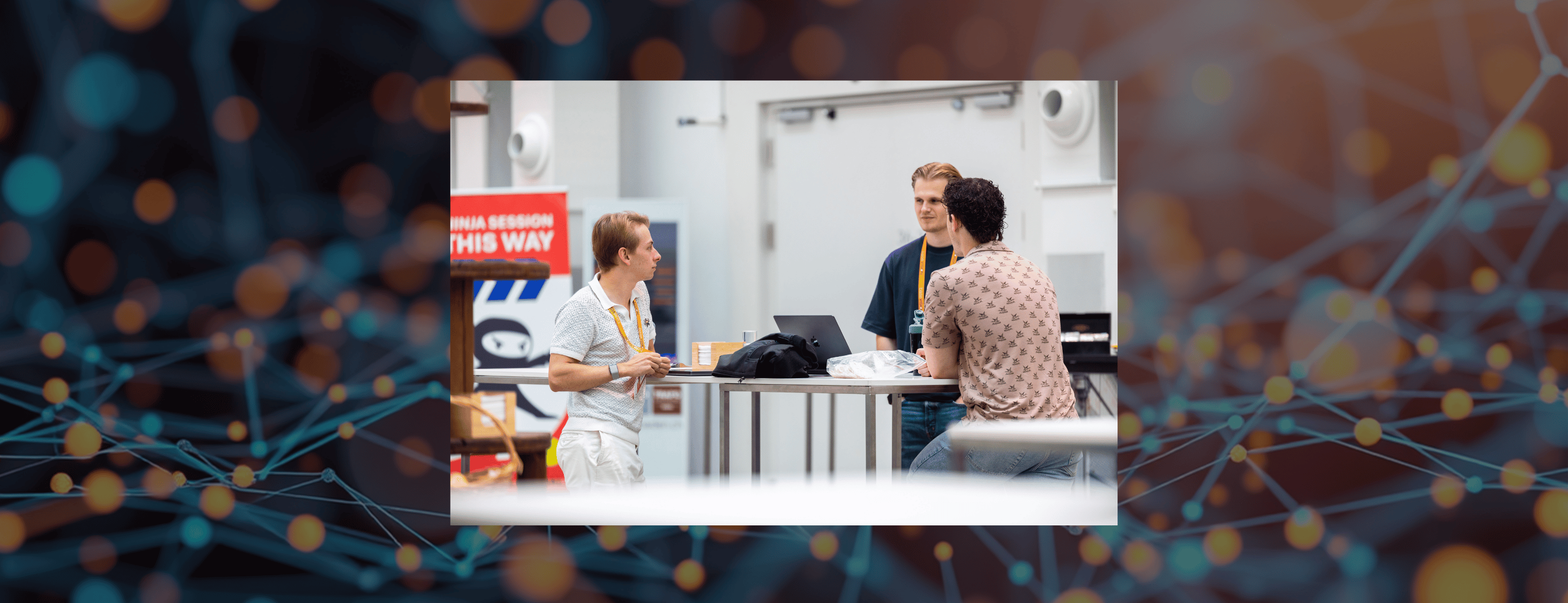
From September 14 to 17, 2026, the Workplace Ninja Summit took place in Baden—one of Europe’s most significant community events for Microsoft 365, Intune, cybersecurity, artificial intelligence (AI), and the modern workplace. Our Oria experts Jérome Kirschenhofer, Sandro Schmocker, and Colin Baumgartner were also in attendance, where they exchanged ideas with Microsoft product teams, MVPs, and international experts.
This year's event made it clear: Artificial intelligence is increasingly evolving from an innovation topic into a strategic corporate resource. At the same time, governance, security, and endpoint management are becoming more closely intertwined than ever before.
AI governance is becoming a fundamental requirement
One of the dominant themes of the summit was the safe and responsible use of artificial intelligence in the corporate environment. The discussions clearly showed that companies today are no longer deciding whether to use AI, but rather how to use it in a controlled, secure, and compliant manner.
The focus is increasingly shifting from the AI models themselves to topics such as data classification, identity management, governance, compliance, and access control.
Key Insight: Successful AI strategies are based on clear guidelines, defined responsibilities, and a consistent data and security strategy.
AI requires the same security standards as users and applications
Several sessions addressed the question of how companies can protect their AI environments. Particular emphasis was placed on risks posed by so-called “shadow AI,” uncontrolled agents, and potential data leaks.
To address these challenges, companies need transparency regarding the AI services they use, as well as clear security and usage policies.
Conclusion: In the future, artificial intelligence must be managed and monitored in a similar way to user accounts, devices, or applications.
Significant Advancements in Microsoft Intune
In discussions with Microsoft product teams, it became clear that Intune continues to play a central role within the Microsoft platform. Investments in new features, optimized support processes, and closer collaboration with customers are intended to further accelerate its development.
For companies, this means even greater integration of device management, compliance, and security features.
Conclusion: Intune remains a key component of modern endpoint management strategies.
Declarative Device Management Is Becoming the Standard for Apple Devices
Another key focus was on developments related to Apple Device Management. Microsoft and Apple are working together to drive the adoption of Declarative Device Management (DDM).
Unlike traditional MDM approaches, devices operate much more autonomously and automatically report relevant changes. This allows policies to be implemented more quickly, reduces network load, and enables more reliable collection of status information.
Conclusion: DDM will establish itself as the new standard for managing Apple devices in the medium term.
Cybersecurity is evolving from a protective shield to an early-warning system
The developments in Microsoft Defender presented here clearly demonstrated a shift from reactive to proactive security strategies. Modern security platforms not only detect attacks but also help companies identify and prioritize risks early on.
The focus is on:
- Risk Analyses
- Threat Intelligence
- automated reactions
- Preventive safety measures
- Continuous risk management
Insight: Security is increasingly becoming an ongoing process rather than a mere reaction to security incidents.
Enterprise AI Agents Are Transforming the Modern Workplace
Another topic for the future was intelligent AI agents. In the future, these agents will independently handle tasks, provide information, prepare decisions, and interact with corporate data.
However, this gives rise to new requirements for governance, security strategies, and monitoring mechanisms.
Insight: AI agents are evolving into independent corporate resources and require the same security and governance measures as traditional business applications.
New Challenges Posed by AI on End Devices
As AI capabilities become increasingly available directly on smartphones, tablets, and laptops, new challenges are emerging for IT and security teams.
In the future, companies must be able to define which AI applications, services, and on-premises AI capabilities may be used and how sensitive company data will remain protected.
Insight: AI governance will become an integral part of endpoint management.
Cybersecurity as a Business Enabler
A recurring theme in many of the presentations was the role of security within modern companies. Security should not be viewed as an obstacle to productivity, but must actively support business processes.
Successful security strategies combine technical safeguards with communication, awareness, and a deep understanding of business requirements.
Insight: The best security strategies provide protection while also enabling efficient work.
Modern attacks specifically circumvent existing security measures
Hands-on sessions such as “11 Ways of Hacking Windows 11” and “Bypass Modern Security” demonstrated that attackers are increasingly attempting to disable or manipulate existing security mechanisms.
It became particularly clear that physical access to devices continues to pose one of the greatest risks.
Conclusion: Hardening, tamper protection, and multi-layered security concepts remain indispensable.
Many SOC features are already available
The session titled “Build Your SOC 24x7 for 0 Euros” generated particular interest. It demonstrated how companies can establish professional security operations processes using existing Microsoft technologies.
These include, among others:
- Microsoft Sentinel
- Microsoft Defender
- Azure Lighthouse
- Automations and Playbooks
Key insight: Numerous powerful security features are already available in existing Microsoft environments and often simply need to be combined in a targeted manner.
Threat intelligence is becoming a decisive factor
Modern cybersecurity is no longer based solely on technology, but increasingly on an understanding of real-world threats and groups of attackers.
Companies need to know which risks are actually relevant and which attack methods are currently being used.
Insight: An effective security strategy combines modern tools with up-to-date knowledge of threat landscapes and attacker behavior.
Conclusion
The Workplace Ninja Summit 2026 clearly demonstrated that the future of the modern workplace will be shaped by three key themes: artificial intelligence, security, and governance.
The growing convergence of endpoint management, cybersecurity, and AI strategies became particularly evident. Companies face the challenge of rapidly integrating innovations while ensuring security, compliance, and control.
The insights gained at the summit are already being incorporated into Oria’s consulting services and projects. The participation of Jérome Kirschenhofer, Sandro Schmocker, and Colin Baumgartner provided valuable insights into current developments and future requirements for modern workplace solutions.