


OMR 2026: Between AI Hype and Real Relevance
Amid AI keynotes, discussions on the creator economy, LinkedIn talks, and crowded coffee corners, one thing becomes clear at OMR 2026: The internet is changing faster than ever before.
70,000 attendees, 800 speakers, and countless perspectives later, one question still stands out for me: Which of these will still be relevant tomorrow?
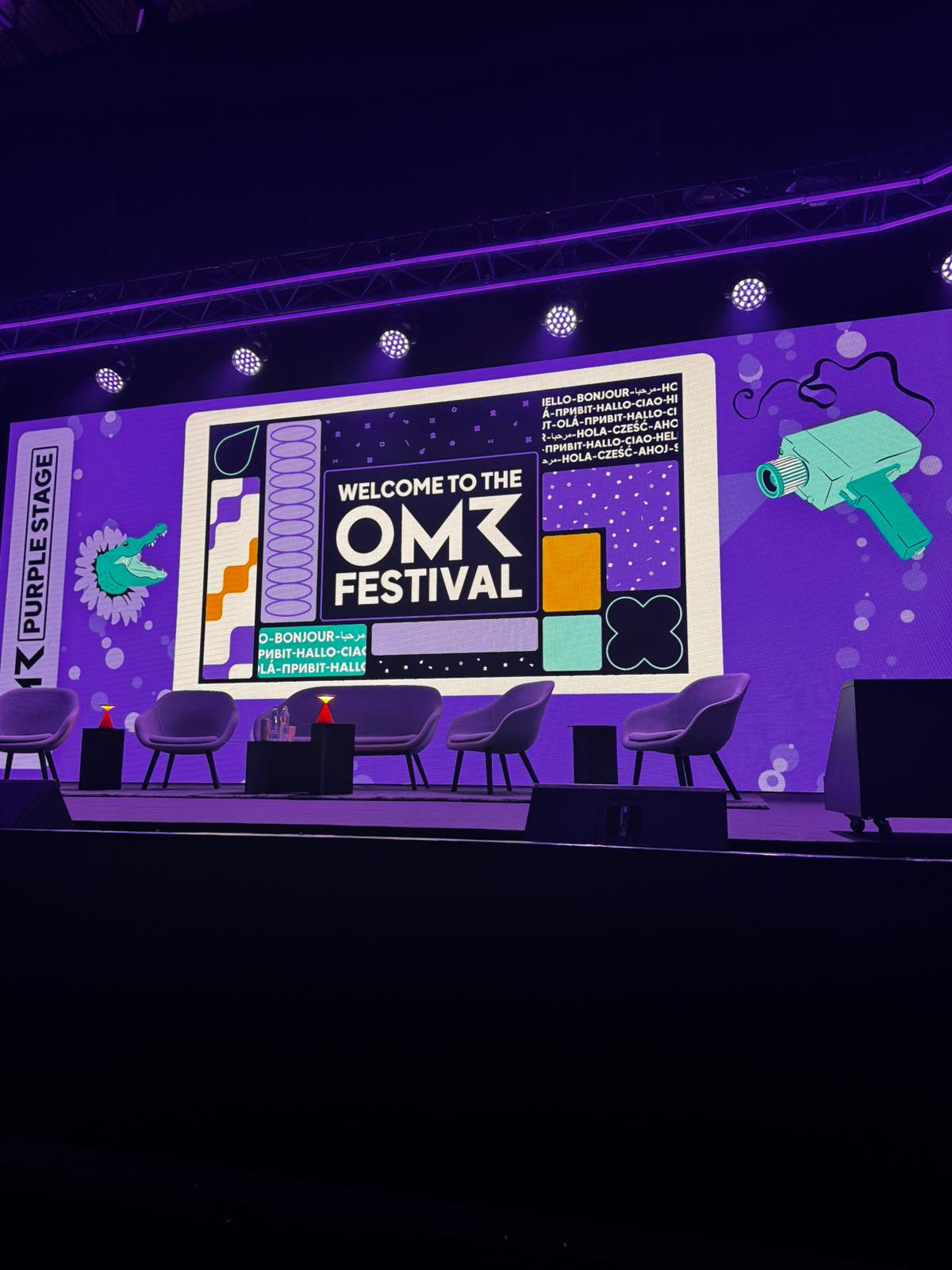
After many keynote speeches, exciting encounters, and even more insights, three themes in particular ran like a common thread through the entire festival:
- AI is changing everything, but not without people
- Communities are becoming more important than reach
- Brands need to become more relevant, not just more visible
And that is precisely where there lies enormous potential for companies like ours.
AI is no longer just a trend—it’s the new infrastructure
If you had to sum up OMR 2026 in a single word, it would probably be: AI.
Whether it was Google, LinkedIn, Anthropic, Storyblok, or Yext, practically every session revolved around artificial intelligence. But what was truly fascinating wasn’t so much that AI is changing everything, but rather how it was discussed. One of the most important statements came from Scott Galloway: “AI will change work, not end work.” And it was precisely this mindset that ran through many of the sessions. It was no longer a question of whether AI is coming, but rather which companies will learn to work with it effectively.
The following two perspectives were particularly interesting:
AI makes content creation easier, but good content more valuable
Anne-Kathrin Gerstlauer summed it up perfectly: "We don't need more mediocre AI-generated content. We need better writing."
And that is exactly what is happening right now: creating content is getting easier. At the same time, however, this increases the value of truly good ideas, clear positioning, and genuine relevance. So AI isn’t replacing creativity; it’s penalizing creativity that’s easily replaceable.
Visibility changes completely
Several speakers also pointed out that traditional SEO strategies are becoming less and less relevant. In a world with ChatGPT, Gemini, and Perplexity, it’s no longer just about ranking on Google, but about being part of the answer at all.
Wendi Sturgis (Yext) put it this way: In the future, visibility will no longer come solely from rankings, but from being cited by AI systems.
For businesses, this means that content must become more structured, clearer, and more trustworthy. And this is precisely where ORIA has enormous potential, because while many companies possess data, knowledge, and content, they often lack a clear structure, a consistent content architecture, and AI-ready processes.
In the future, the question will no longer be, "Do we have content?" but rather, "Can AI even understand and use our content?"
Reach is becoming less important; community is gaining ground
A second major theme ran through nearly every other session: people are seeking connection again. This became particularly clear during the discussion with Keily Blair, the CEO of OnlyFans. And no, surprisingly, the conversation focused much less on the platform itself than on a much broader societal shift.
The key takeaway: People no longer pay just for content; they pay for access, connection, and community. Today, creators are building their own media companies, independent of traditional platforms or brands. What used to be about reach is now about building relationships.
And that was exactly the sentiment you heard everywhere again:
- Brands should act more like creators
- Communities must become more important
- Communication needs to be bolder and more personal
Or, as another OMR participant aptly put it: "OMR is like real-life LinkedIn. It is what you make of it."
The best brands aren't perfect—they're relevant
One of the talks I personally found most compelling was the one by Tom Inbal: "Marketing has a courage problem." It’s a statement that really sticks with you, because so many companies today are focused solely on optimization:
- more data
- More dashboards
- greater security
- better performance
But that is precisely what often results in generic content. In the future, AI will take over this optimization. What remains is courage.
- The courage to try new things.
- The courage to show your true self.
- The courage to not be perfect.
This was also evident among many successful brands at OMR: they come across as more human, more responsive, more approachable, and less “corporate.” This shift is particularly noticeable on LinkedIn. Today, people don’t follow the loudest brands. They follow perspectives, opinions, and personalities.
What does this mean for companies like ours?
For me, OMR was less of a pure marketing conference and more of a look at how digital communication is fundamentally changing. The most interesting insight I took away was that technology alone will no longer be a competitive advantage in the future.
Almost everything is becoming easier to copy:
- Tools
- Features
- Workflows
- Content Production
What remains are:
- Trust
- Clarity
- Community
- true relevance
- strong positioning
And that is exactly why companies will succeed if they:
- Integrating AI Effectively
- strengthen human communication
- test boldly
- build genuine relationships
- and not just reach, but impact
My personal conclusion
OMR 2026 was loud, fast, and at times completely overwhelming, but amid all the buzzwords, these are the thoughts that have really stuck with me:
- AI is currently changing the rules of the game
- Communities are becoming more important than attention
- Relevance beats reach
- and humanity becomes more valuable rather than less important in the digital realm
Or, to quote Roland Eisenbrand: "This is sick, bro."
…and in a way, that actually describes current trends on the internet pretty well.
Thursday, May 7, 2025 | Aliena Schweizer, Professional Marketing & Communication Specialist