


NetApp INSIGHT 2026: Impressions from Las Vegas
Michael Trutmann and I had the opportunity to attend NetAppINSIGHT 2026 in Las Vegas this year. The event focused on how companies can use their data in hybrid cloud environments in a way that is secure, resilient, and efficient for AI.
The key message of the keynote presentations can be summarized as follows: AI requires not only powerful GPUs, but also an intelligent, secure, and scalable data infrastructure. Two announcements were the main focus: NetApp Novus and the NetApp AI Data Engine (AIDE).
NetApp Novus: Architecture for AI Factories Without Storage Bottlenecks
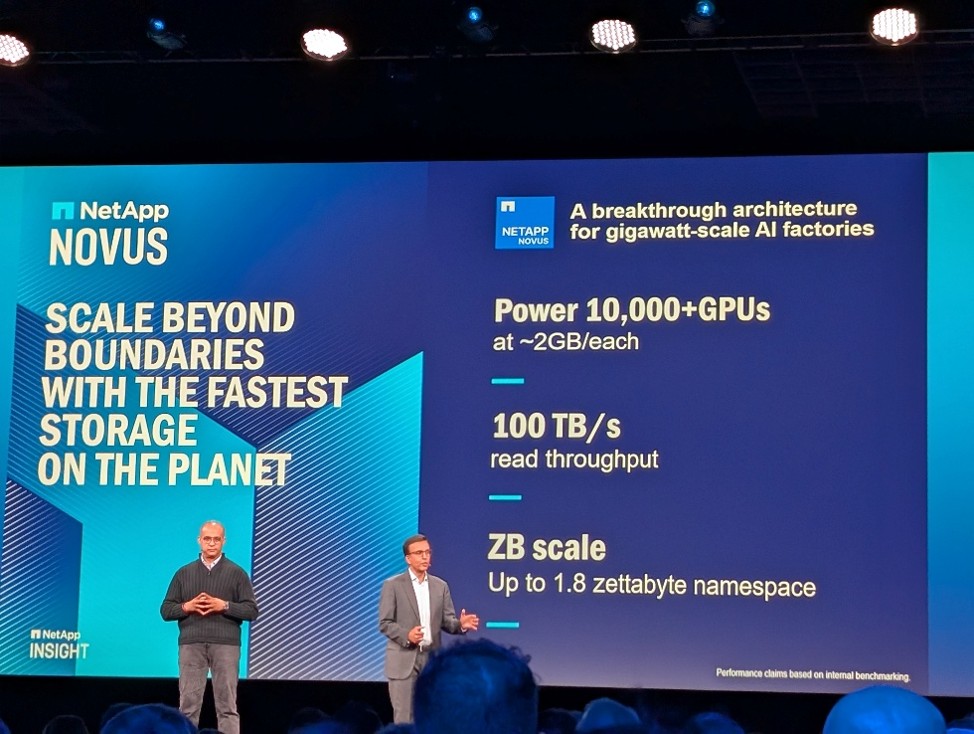
With NetApp Novus, NetApp introduced a new storage architecture for AI factories on a gigawatt scale. It is primarily aimed at operators of large AI infrastructures and so-called “neoclouds”—or GPU-as-a-Service providers—who need to utilize massive NVIDIA GPU clusters as efficiently as possible. (For us at Sharp DX, this architecture might still be a little too big right now. ;)
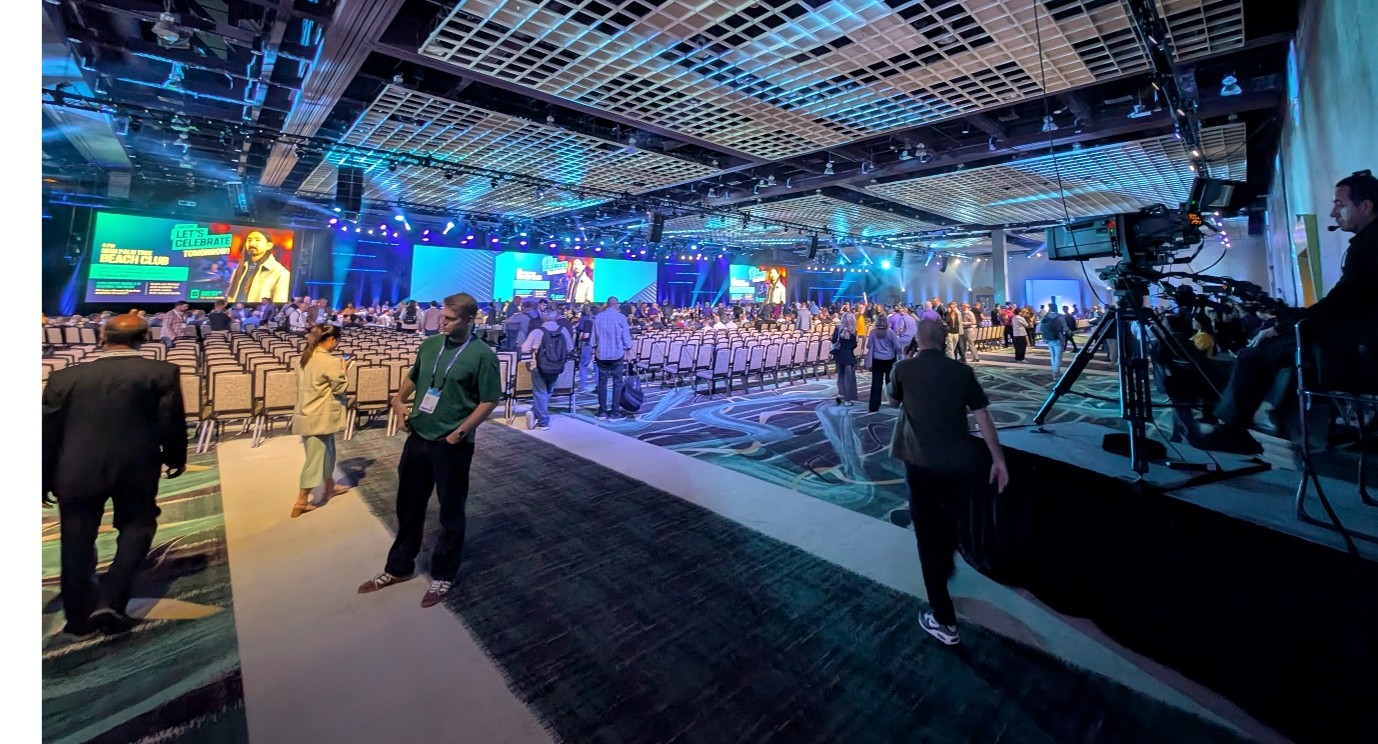
The architectural breakthrough lies in disaggregated metadata management. Novus strictly separates metadata processing from the actual data path. The architecture is based on NetApp AFF A90 controllers. Arista switches are used for the network. The system can scale up to the zettabyte range and achieve up to 100 TB/s of throughput in a shared namespace. It remains to be seen how relevant Novus is for Switzerland and which companies—or even customers—actually need that much storage capacity.
NetApp AIDE: Enable Enterprise Data for AI Without Making Copies
While Novus provides storage performance, the NetApp AI Data Engine (AIDE) helps companies make their existing data available for AI use in a controlled manner. AIDE creates a searchable catalog spanning multiple storage systems. The files remain in their original locations. This eliminates the need for additional copies and reduces the risk of them being shared uncontrollably. The added value for AI governance lies in concrete guidelines, known as “guardrails.” IT teams can identify overly broad permissions and specify which parts of the metadata catalog AI agents are allowed to search. This enables companies to identify access risks early on and limit access to the metadata approved for the specific use case.
In addition to the keynote presentations, the breakout sessions offered many technical updates and the opportunity to speak directly with product managers. We were able to discuss our specific use cases with the AIDE team, suggest new features, and raise the profile of Sharp DX Switzerland as a managed service provider (MSP). Nutanix also demonstrated in a separate session how external NetApp storage can be integrated into the Nutanix platform. The session provided an overview of which scenarios are already supported and where the integration still has limitations.
We never got bored in the evenings either. On Monday night, Cleondris invited us to a get-together at BrewDog. On Tuesday night, we took the opportunity to attend the NHL game between the Vegas Golden Knights and the Chicago Blackhawks.
Tuesday, November 10, 2026 | Raphael Zumwald, Professional System Engineer