


KubeCon EU – Impressions from Amsterdam
This year’s KubeCon + CloudNativeCon Europe transformed the impressive RAI Amsterdam into a vibrant hub of the cloud-native world. As one of Europe’s largest exhibition and convention centers, the venue provided the perfect setting for an event of this scale: spacious halls, an international audience, and a packed schedule featuring numerous concurrent tracks—the energy and innovative spirit of the community were palpable everywhere.
With over 10,000 attendees from around the world, hundreds of sessions and hands-on workshops, and a sprawling exhibition area, it quickly became clear: KubeCon is far more than just a conference. It is a central hub for ideas, trends, and technologies related to Kubernetes and cloud-native—and a striking testament to how strongly these topics are shaping the IT landscape of today and tomorrow.
What is KubeCon?
KubeCon is the premier conference focused on Kubernetes and the entire cloud-native ecosystem. Organized by the Cloud Native Computing Foundation (CNCF), it brings together developers, platform teams, and companies that build and operate modern IT infrastructures.
It’s no longer just about Kubernetes itself, but also about topics such as networking, observability, storage, security, and platform engineering. In short: If you’re involved in modern IT, KubeCon is a must-attend event.
Our on-site team
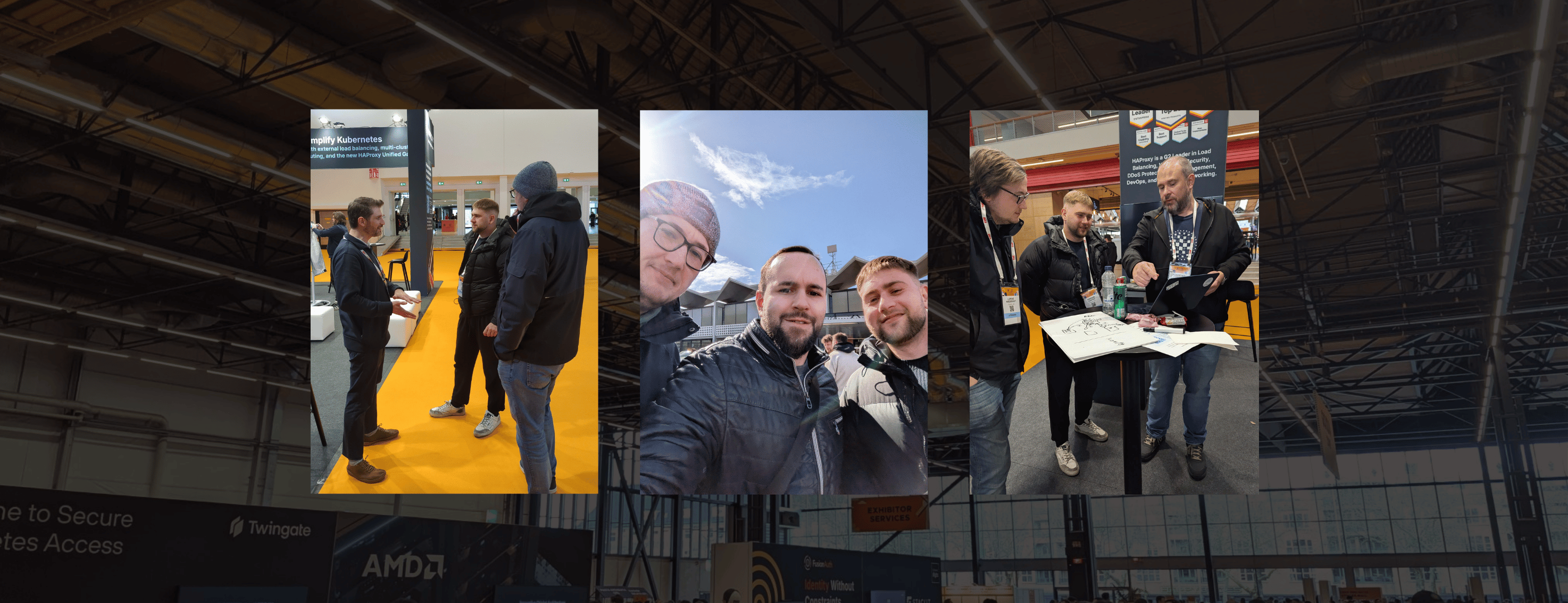
The Linux and Kubernetes (L&K) team was represented by Gregor Liedtke, Lukas Niederöst, and Alessandro Catale. The goal was to stay abreast of current trends, network, and evaluate new technologies.
Our Areas of Focus
Our focus was on topics that directly benefit our customers.
In the field of hypervisors and virtualization, we have been actively exploring modern approaches such as KubeVirt. KubeVirt enables virtual machines to be run directly within Kubernetes and allows traditional VM workloads to be combined with containerized applications on a single platform.
For us as a hosting provider, this is an exciting approach to gradually migrate existing systems to a Kubernetes environment—especially given the recent Broadcom/VMware price increases, which are forcing many companies to rethink their virtualization strategies.
In a particularly hands-on session titled "Sponsored Demo: Ctrl+Alt+Deploy – Windows Workloads as a Service powered by KubeVirt," it was clearly demonstrated how traditional Windows workloads can be run directly on Kubernetes. The session showed how virtual Windows machines can be deployed and operated using KubeVirt—including typical enterprise use cases.
The session made it clear that Kubernetes is no longer relevant only for containerized applications, but is increasingly serving as a platform for traditional VM workloads as well.
In the area of networking, there was a clear focus on modern solutions such as Cilium. This demonstrated just how powerful and transparent network security and observability can be when implemented in Kubernetes.
Monitoring and observability were also key topics—with the goal of making complex systems easier to understand and ensuring stable operation.
Particularly valuable conversations
In addition to the sessions, the direct conversations with manufacturers and developers were particularly valuable.
One highlight was the discussion with HAProxy on the topic of Kubernetes and Ingress. The focus was on high-performance and stable ways to manage traffic in Kubernetes environments.
Equally fascinating was the conversation with a Longhorn developer, which focused on storage strategies—a critical component of any Kubernetes platform.
Market Trends: Broadcom & Price Increases
Another hotly debated topic at KubeCon was the current market situation surrounding Broadcom and the associated price increases, particularly in the context of VMware.
Many companies are facing the challenge that existing virtualization platforms are becoming significantly more expensive. Consequently, there is considerable interest in alternatives and new approaches.
This is precisely where technologies like Kubernetes—and KubeVirt in particular—are becoming even more important. They make it possible to reduce dependencies and become more flexible and cost-effective in the long run.
AI is everywhere, but it doesn't always make sense
One striking trend was that it seemed like 80% of the products had "AI" in their names.
Upon closer inspection, however, it often became clear that many of these solutions contained little in the way of true artificial intelligence. In many cases, they amount to little more than advanced search functions or marketing gimmicks rather than offering genuine added value.
Our conclusion: Not everything marketed as AI is actually useful or relevant for practical application. Businesses, in particular, would do well to take a critical look at this.
Conclusion
KubeCon has once again demonstrated just how dynamically the Kubernetes ecosystem is evolving. Kubernetes has long since made its way into the enterprise, and the technologies are becoming increasingly mature and powerful.
At the same time, however, complexity is also increasing. This is precisely where experience is crucial for using Kubernetes effectively and efficiently.
As a Linux and Kubernetes team, we help companies implement Kubernetes in a practical way and operate it sustainably—without unnecessary complexity.
Outlook
The KubeCon talks will be posted online in the coming weeks. It’s worth watching selected sessions later to delve deeper into the topics.